
Monday, 8 May 2017

Hardwickia binata
 |
| The majestic tree stands tall |
 |
| Crocodile bark |
Common name: Anjan tree
Scientific name: Hardwickia binata
Scientific classification: Kingdom: Plantae
Phylum: Angiospermae
Class: Eudicots
Order: Fabales
Family: Fabaceae
Subfamily: Detarioideae
Genus: Harwickia
Species: binata
 |
| Mature leaf |
Type of species: Indigenous
Distribution: The tree is most commonly found in the dry open forests of Central and South India. However, its range extends to the western Himalayas up-to 1500m elevation.
Habitat: Dry deciduous forests
Conservation status: Least concern
Distribution map:
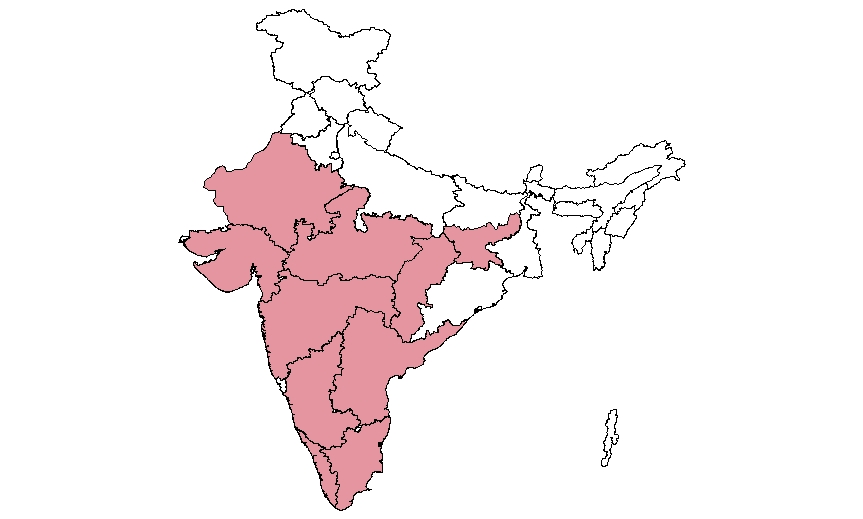 |
| Sourced from envis.frlht.org |
Saturday, 11 February 2017


Orthomorpha coarctata
 |
| Two millipedes mating. |
 |
| Defense mechanism |
 |
| To scale. |
Scientific name: Orthomorpha coarctata
Scientific classification: Kingdom: Animalia
Phylum: Arthropoda
Class: Diplopoda
Order: Polydesmida
Family: Paradoxosomatidae
Genus: Orthomorpha
Species: O. coarctata
Type of species: Indigenous
Habitat: Found in a wide range of habitats. One such area is semi-forested areas with high levels of humidity.
Conservation status: Least concern
Distribution: This common millipede is purported to be native to Southeast Asia. Unfortunately, due to human carelessness, it has found its way across the world (sub-tropics only).
 |
| Source: wikimedia |
Subscribe to:
Posts (Atom)